
Summer is here! Yes, we all know that the official first day of summer isn’t until June 21. But why worry about being so official? Memorial Day has come and gone, and after the ugly winter and lackluster spring most of us had to suffer through, aren’t we all ready to embrace summertime a bit earlier than what’s “official”?
Speaking of things being official, though, since it’s officially June it means it’s time for Birkat Elyon to take a look at another month’s babies and their gemstones! For those of who were lucky enough to be born on this beautiful summer-ish month, you’ve got not one, not two but three birthstones to choose from. Lucky you.
Alexandrite
Alexandrite could accurately be referred to as a “modern” gem. Though it’s closing in on 200 years since its first discovery, alexandrite is young in the world when compared to most other stones, which have been around for thousands of years longer. It was first dug up in Russia in 1831 while Czar Alexander II, from whom it takes its name, was in power. It was first found in an emerald mine in Russia’s Ural Mountain Range.
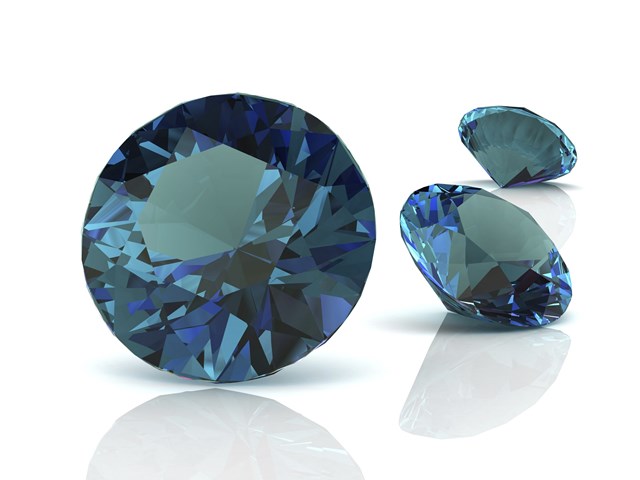
We’ve detailed many gems that come in a variety of colors over the last several months, but alexandrite is particularly interesting in this regard. It possesses an astounding chameleon-like ability to actually change colors. During the day, the stones appear a beautiful green and sometimes have a bluish hue or even a brownish tint to them. When placed under artificial light, however, alexandrite will turn to a violet or reddish-violet color.
The stone is a part of the chrysoberyl family, which, in the chemistry world, is a mineral known as beryllium alumni oxide. You know that old thing, right? In any case, the only harder minerals in the world are diamonds, sapphires and rubies. Alexandrite’s abnormal color-changing ability is attributed to the existence of chromium in it.
An uncommon stone, Alexandrite can be extremely costly to obtain. It is most commonly dug up in Sri Lanka, but it’s also frequently found in Madagascar, Tanzania, Myanmar, Zimbabwe and Brazil.
Alexandrite is available in a synthetic form that looks like a reddish-hued amethyst with a bit of green to it. Unfortunately, this manufactured form of the stone lacks the breathtaking color-changing ability of the real deal. As a result, the synthetic version has been unable to find a high level of popularity in America. In Russia, though, it remains popular because it reflected the national colors of red and green.
Thanks to its relatively recent discovery – again, compared to other gemstones – alexandrite lacks the mystical superstitions that are commonly associated with almost every other gemstone in the world.
Moonstone
Probably named for the white and blue spots contained within them, moonstones are another birthstone for June babies. When held up to a light source, these spots project a silvery color that’s not unlike that of actual moonlight. Furthermore, when you move one of these stones back and forth you’ll be rewarded with a show of the rays moving about like moonbeams hitting a body of water.
Moonstones are part of the feldspar family of minerals, which is an important collection of silicate minerals that are frequently formed inside of rocks. Interestingly, approximately 50 percent of the Earth’s crust is made up of feldspar. It’s unsurprising, then, that it makes up many igneous and metamorphic rocks and a significant percentage of soils and marine clays.
In rare instances, other varieties, like moonstone, are created. When this happens, they appear as big, clean mineral grains. The very best moonstones come from Sri Lanka, just like alexandrite stones. Other locations the gems are mined from include Madagascar, Myanmar, India and the Alps.
Thanks to the dubious claims of the ancient Roman historian Pliny, it was long believed that moonstones’ appearances were able to change along with the phases of the moon. That is, of course, not true, and the belief died out around the 16th century. Those nutty Romans also thought the goddess Diana’s image was captured within the stones. Finally, mystics also attributed them with bringing about good health, wisdom and victory.
Pearl
Lustrous and lovely, the pearl is June’s third gemstone. We won’t spend too much time talking about it, though, since we already recently dedicated a full blog post to pearls. But, they’re so enchanting that we will give them another brief mention here.
Pearls are created naturally in mollusks when a small piece of rock, grain of sand or a parasite enters its shell. The mollusk then coats the foreign object in many layers of shell material, forming a pearl. Their delicate translucence and luster make them extremely popular and valuable as jewelry. Though white is the common and most popular color, pearls are also available in black, gray, yellow, lavender, mauve, cream and blue. Check out our pearl blog post for more info about this gem.
High-Quality Cubic Zirconia
It may not be one of June’s official birthstones, but high-quality cubic zirconia is perfect any time of the year. At Birkat Elyon, we sell only the Russian Formula cubic zirconia, meaning it’s the highest of the five readily available forms of cz on the market. This high-quality cubic zirconia is so breathtaking, that even veteran gemologists can have trouble differentiating it from the real thing.