
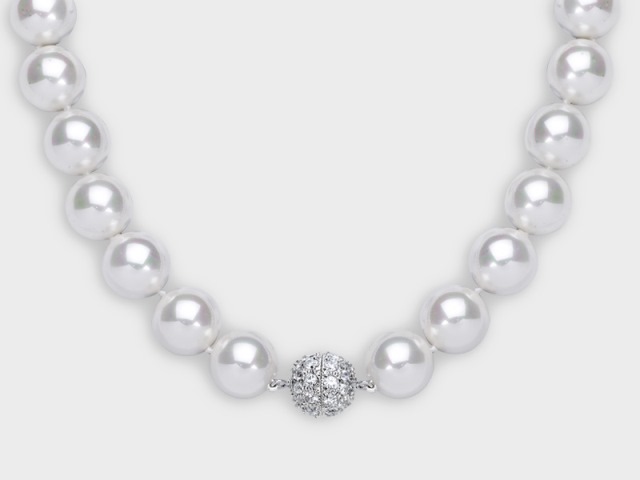
Mother’s Day is behind us, and we hope all of our mom readers out there and all of our readers with mothers – so, basically, everyone – had a great one with their families. In addition to the wonderful women who brought us into this world and raised us, Mother’s Day also reminds us of Mother of Pearl and (naturally) pearls.
Pearls are closely linked to the history of mankind dating all the way back to the fourth millennium BC when the ancient Egyptians began using pearl shells as decorative items. In addition to historical evidence of their use as jewelry and decorative objects, pearls also turn up in two of the most popular religious tomes in the world: the Bible and the Koran. And, as it is with most jewels and gemstones, mystics over the years applied cosmological and mythological explanations for them.
Not Eggzactly
Most readers are likely familiar with the common story behind pearls: oysters rise from the surface of the waters in the mornings and open their shells to receive a few drops of moisture that develop into pearls. Not exactly scientific, but it’s a fun explanation, so it caught on for many centuries. It wasn’t until the 15th century when the popular belief changed to that of pearls being oyster eggs. That one stuck around until about the 1700s when it was discovered that pearls were, in actuality, the result of the intrusion of hard substances or parasites into oysters.
The reality isn’t exactly romantic or mystical, is it? Well, historical and scientific truths often aren’t. That’s just the nature of the world, but, hey, we won’t fault you if you want to go on pretending they’re oyster eggs just for fun. The point is, they’re marvelous gems that are loved by many the world over for being symbolic of perfection and purity, affluence and elegance.
Pearls can be found in a great variety of shapes, colors and sizes. And it’s possible for any mollusk to create them – possible, but hardly common. In fact, naturally occurring pearls are believed to only form in one out of every 10,000 mollusks. Starting in the early 1900s, however, the pearl industry began developing a number of methods to increase those odds. As a result, there are more pearls being produced today than at any other time in history.
From Mothers to Pearls
Pearls are thought to be the first gems that man has collected and used. It is commonly held that in the days of antiquity before the start of written history, the first pearls were discovered when hunting parties were out scouring the shorelines for seafood. Ever since that time, the world has been drawn to the gems’ shimmering, lustrous beauty.
Those “old school” Egyptians we name checked at the beginning of this blog? They used Mother of Pearl (the outer coating of pearls) for decorations, not beginning to use the gems themselves for such until sometime around the 5th century, when they started burying people with them. Around the same time, another culture picked up the habit of prizing pearls, and many others followed suit over the years:
- Historical texts claim the Chinese began using pearls around 4,000 years ago, some 1,200 years after the Egyptians started the trend.
- India has been fond of the gems for 3,000 years, with pearls turning up in various poems and religious texts originating around that time period.
- About 300 years after that, the Persians got on board. In fact, it’s believed that Gulf of Persia pearls are the oldest and largest ever found. The Susa Necklace, a 2,400-year-old pearl necklace from an ancient queen’s tomb, is believed to be the oldest piece of pearl jewelry in existence today.
- Around the same time, the Greeks began their love affair with pearls. Homer even described Juno as wearing pearl earrings.
- The Ancient Romans, as they were wont to do, likely took a cue from Greeks of the day when it came to pearls. The Roman Empire became so enamored with pearls, that it may have even overtaken India as the foremost trader of them, and laws were passed stating only society’s elite could wear the jewels.
- Sri Lanka (nee, Ceylon) has records of a king sending pearls as gifts some 2,500 years back.
- The Chinese report that Filipinos began trading pearls with them 1,400 years ago.
- Thanks to the Romans and their expansive empire, all of Europe eventually began hunting for pearls in riverbeds. Once the Roman Empire fell, European nobility began wearing pearls as jewelry, and The Crusades furthered the market for them thanks to military campaigns near the Persian Gulf.
- Finally, The New World became a major source of pearls – so much so that they became a primary form of Spanish currency – after they were discovered in Baja California.
More on Mothers
Today, some people wear fake plastic or glass pearls to enjoy the appearance without the expense. But these are cheap, hokey imitations. Thankfully, there’s a better alternative.
At BirkatElyon, simulated pearl jewelry is crafted from natural Mother of Pearl shells harvested from the oceans. These natural shells are then carefully shaped into beads, finely polished and coated to increase their beautiful iridescence.