
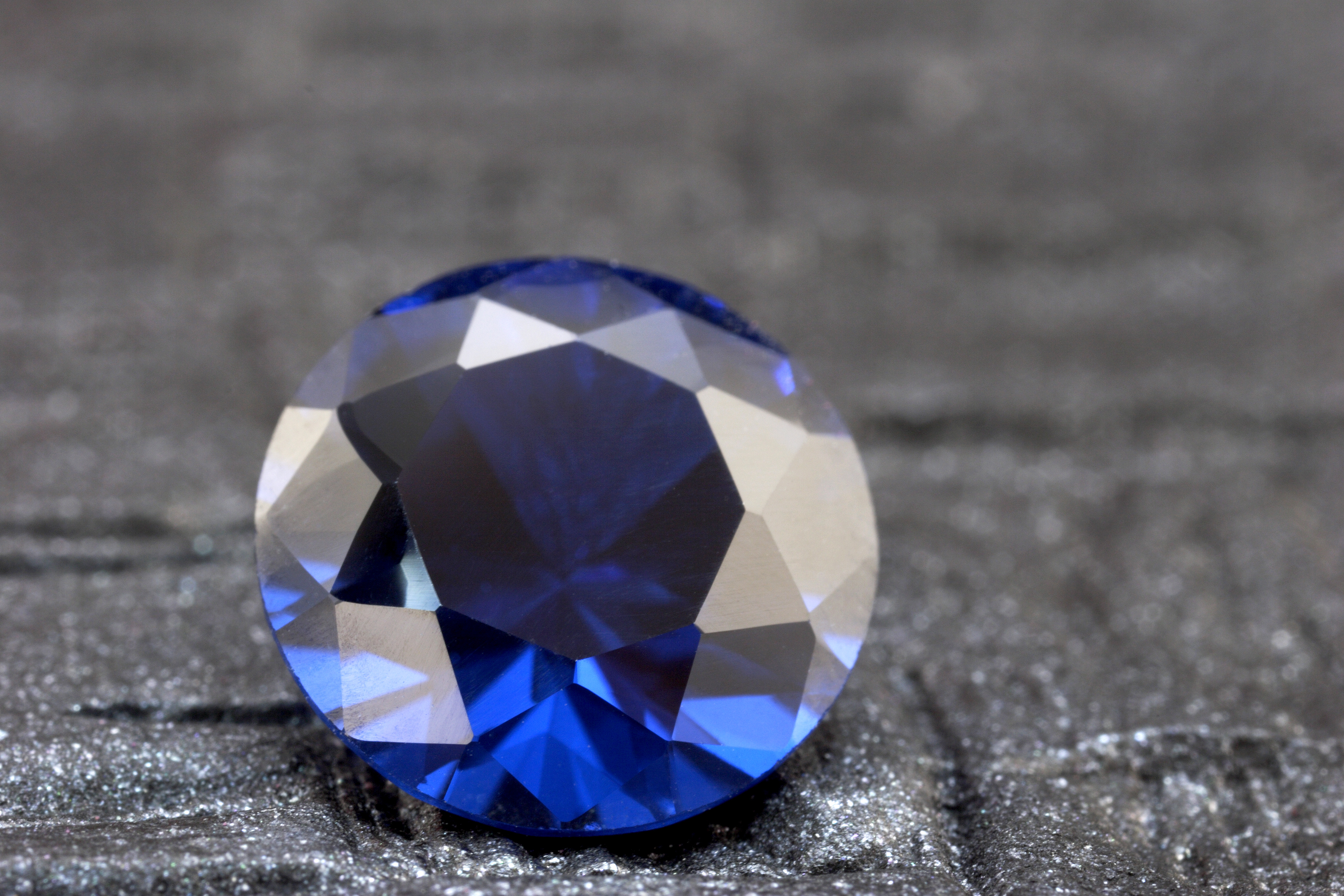
Labor Day may mark the “unofficial” end of summer in the US, but September babies know how silly that is. Who says your summer fun has to end the first weekend of September? Not us. You’ve got all the way until September 23 to keep enjoying summer, and even then you’ll have the beautiful changing of the seasons over to early autumn to enjoy. For those of you born in September there’s also a pretty special birthstone that makes this month great: sapphire.
Available in just about every color of the rainbow (sorry, not red), sapphire is a particularly striking variance of the mineral known as corundum. It comes from the Persian word “safir” which means “beloved of Saturn” as well as the Greek word “sappheiros,” which, depending on whom you ask, either means “blue” or “precious stone.” It joins diamonds, rubies and emeralds as the four stones recognized as being precious.
Today this precious gemstone is most often found in Australia, Thailand and Sri Lanka. Other sapphire-mining nations include Kenya, Burma, Tanzania and Kampuchea. They’re even found in the United States, most commonly in Montana’s Yogo Gulch Mine. After they’re unearthed, the stones are often heated up to increase the potency of their color and reduce the cloudiness produced by rutile inclusions, which are the reason for the “star” or “cat’s eye” in star sapphires.
Speaking of color, most people immediately think of incredibly bright blues when they hear the word sapphire mentioned. That’s thanks to its Greek etymology and its Biblical meaning: heavenly grace. As mentioned, though, the stones actually come in whites, peaches, pinks, violets, oranges and yellows. The most desired color isn’t even blue! Nope, it’s called “fancy sapphire” and is an incredibly rare and gorgeous padparadscha: a pink-orange corundum with a salmon hue that’s often compared to tropical sunsets. Sounds amazing, right? It is, but it’s also amazingly expensive, as in it’s one of the most expensive gemstone types in the world.
Many centuries ago, however, the sapphire was known as the pinnacle of blue gemstones. What’s more, these “blue” gemstones were thought to signify loyalty, trust, honesty and purity in the days of antiquity. In keeping with that ancient, mystical belief, the sapphire is one of today’s most popular choices for engagement ring gemstones.
Speaking of purity, sapphires were worn by priests as protection against impure thoughts and carnal temptations in the eras preceding the Middle Ages. Europe’s medieval kings would later value the stones for use in rings and brooches in keeping with the superstition that they would ward off envy and harm. Warriors are also said to have prized the sapphire, giving necklaces with the gemstones to their wives in an attempt to keep them faithful. In fact, mysticism held that when the stones were worn by adulterers, adulteresses or other “unworthy” individuals they would change to a much darker color.
Still another superstition was that sapphires would protect their wearers from being harmed by snakes, reptiles and spiders. It sounds silly today, but back then some believed that placing such animals in a jar with a sapphire would instantly kill them.
Thirteenth century Frenchmen had yet another idea about the stones’ preternatural powers. They thought sapphires would magically transform the ignorant into the wise and the irritable into well-mannered individuals. In the minds of medieval and ancient mystics, the sapphire was a regular cure-all.
The 19th century British royals probably weren’t thinking about those superstitions, but they nevertheless valued the stones highly. One of the most famous sapphires of all time was Queen Victoria’s. The queen’s 1838 Imperial State Crown had a sapphire setting in it. The gem is known as St. Edward’s Sapphire thanks to it once belonging to Edward the Confessor, who donned a ring with the stone set in it during his coronation many years earlier in 1042. Today the crown is housed in the British Crown Jewels collection in the Tower of London.
Cubic Zirconia
Because of their status as a “precious” gemstone, many sapphires can be expensive. And for all but the wealthiest among us, the most brilliant sapphires are prohibitively costly. That doesn’t mean you have to give up and resign yourself to never owning any jewelry that shines with the beauty of these stones, though. On the contrary, Birkat Elyon has a wide selection of colored cubic zirconia jewelry matching the striking blue beauty most people envision when they think of sapphires.
Our CZ jewelry is incredibly affordable, available at a fraction of the price of precious gemstones – but few who see it can ever tell that it’s not the real thing. That’s because all of our CZ is made from the “Russian Formula,” which results in it capturing the light so wonderfully that even gemologists can have trouble discerning it from precious stones.