
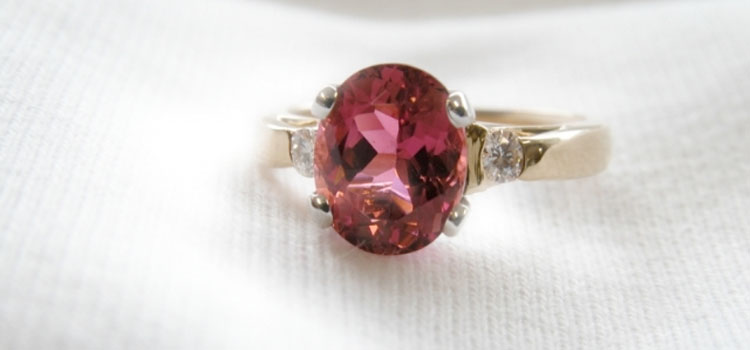
Purchasing an engagement ring with a precious gemstone at its center can be an extreme financial burden for many people. Yes, it carries a lot of emotional weight and helps to symbolize your commitment to the lifelong bond you’re forming with another person, but precious gemstone prices can be prohibitive to many.
It’s understandable, then, that nobody wants to end up paying too much. The good news is that you don’t have to. You have another option. Birkat Elyon specializes in the finest cubic zirconia engagement rings in existence, making only those carefully crafted from the highest quality cubic zirconia available to our customers. All of the beautiful cz stones you’ll see on our site are set in pure platinum, as well as solid 14 and 18k white or yellow gold. It’s affordable beauty for your special someone, and it’s all right here at Birkat Elyon.
The Cost of Gems
So how much exactly will our rings save you over real stones? Well, that all depends. Pinning down the exact cost of a specific gemstone is tricky, because, for example, a specific one-carat emerald may be worth $10 or $10,000. Yes, jewelry is sold and priced primarily according to weight, which is measured in carats (one carat being 200 mg), but the price per carat of different types of gemstones can vary wildly. That’s because prices are based on the Four C’s: clarity, cut, carat and color.
As we outlined in our last blog post, there are dozens upon dozens of gemstones. Only a few of them are considered to be precious, though. Diamonds, emeralds, rubies, sapphires and (sometimes) opals are the only precious gems. Each of these stones is able to command a premium price thanks to their rarity and superior characteristics. Ruby, emerald and sapphire in particular have a lasting appeal and long and distinguished history, making them particularly worthwhile. Generally speaking, rubies and emeralds are actually more expensive than even comparable sapphires because of their higher scarcity.
Expect to pay anywhere from $250 to $10,000 per carat for a stone of this type that is of average to good quality. Want something better? You’ll be looking at even more exorbitant price tags for fine quality versions of these gems.
Lately, another category of what some are referring to as “new classics” has emerged. Tanzanite, tsavorite garnet, imperial topaz, aquamarine and tourmaline make up this category of gem. They can sometimes be had in normal sizes and typically range between $50 and $1,000 per carat for average to good quality. Top tier tsavorite can sometimes reach $3,000 per carat or higher, however.
Next up are connoisseur gems like jadeite, pink topaz, demantoid garner, certain colors of sapphire, alexandrite, black opal and chrysoberyl cat’s eye. Prices for these gemstones tend to fall in between $250 and $5,000 per carat. That being said, alexandrite stones with exceptional color can go for as high as $10,000 for a single carat.
Finally, there are collectors’ gems. Few of these stones are available to sell to the public, so it’s possible to get them at somewhat affordable prices (hundreds, not thousands). Of course, there is an exception: red and hot pink spinels are sometimes sold at a few thousand dollars per carat.
The Four C’s
How exactly are you to know when a particular stone is of average, good or exceptional quality? As mentioned, it mostly comes down to the Four C’s. Yes, things like origin, shape and current fashion trends can also drive prices up or down. It’s the Four C’s that primarily dictate the price of precious and semi-precious stones, though.
Let’s start with color. The ideal color varies from gem to gem, of course, but in most cases it’s pure, intense and vivid shades that are the most highly sought after. If a gem is too far towards either the extreme dark or extreme light it tends to be less expensive than those in more medium tones. Sapphires that are rich cornflower blues, for instance, are typically more costly than those that appear blue-black or pale blue.
As for clarity, if you find a gemstone that is flawlessly clean and has no visible inclusions whatsoever, chances are you’ll have found an absurdly expensive stone. Higher clarity grades command higher market prices, but inclusions that don’t interfere with the brilliance and sparkle of a gem tend to not have significant effects on pricing. It should also be noted that some stones, particularly emeralds, always have inclusions.
Ideally, gemstones are cut with proper proportions to maximize the amount of light that they return to the eye. Unfortunately, cutters and lapidaries frequently are forced to compromise. When the gem color is on the lighter side, a deeper cut will make for a richer color. On the flip side of that, a darker stone will end up lighter in color if a shallower cut is made. In any case, the facets should meet cleanly, and the surface should be well-polished and free of scratches.
We’ve already discussed carats, but it should be noted once again that rarer gem prices do not increase linearly with weight. Diamonds, rubies and sapphires that are of high quality begin to increase exponentially in price per carat.
Finally, expect to pay more for matches, pairs and sets and special shapes or cuts, regardless of what the stone type is.